“After stroke rehabilitation” can mean very different things: continuing therapy at home, reviewing a goal with a stroke team, or asking whether a separate exercise programme is suitable. Stroke can affect movement, balance, energy, communication and thinking in different ways, so the next step should come from the person’s rehabilitation plan and treating professionals. This guide explains how to discuss exercise after stroke rehabilitation, what a safe handover can involve and which questions may help. It is general information, not an individual exercise prescription or a replacement for clinical care.
Start by checking the current plan with the stroke or rehabilitation team. Ask what activity is suitable now, who should introduce it, what support or equipment is needed and how an exercise provider should receive instructions. A personal trainer can coach exercise within their training and scope, but cannot assess the medical effects of a stroke, replace a physiotherapist or decide that independent exercise is appropriate.
NICE’s stroke rehabilitation guideline recommends that physical activity and fitness training are considered in ways that reflect a person’s goals and medical stability. It says that a physiotherapist should start cardiorespiratory and resistance training for people who have been assessed as suitable, and provide instructions for continuing independently. If another exercise provider is involved, the physiotherapist should share any necessary information and adaptations so the programme can be safe and tailored to that person.
People use this phrase to describe different stages of care. It may mean movement practice during a hospital stay, home exercises after discharge, ongoing physiotherapy, or a separate fitness activity that has been discussed with the care team. These activities are not interchangeable. Rehabilitation may include physiotherapy and other support, depending on what the stroke has affected and what matters to the person.
The NHS explains that recovery and support vary. Some people experience a smaller impact over days or weeks; for others, recovery can take months or years and involve changes to daily life. A healthcare team may create a home recovery plan, arrange equipment or offer therapy in person or remotely. The plan and goals, rather than a general online routine, are the starting point for discussing what happens next. Read the NHS information on recovering from a stroke.
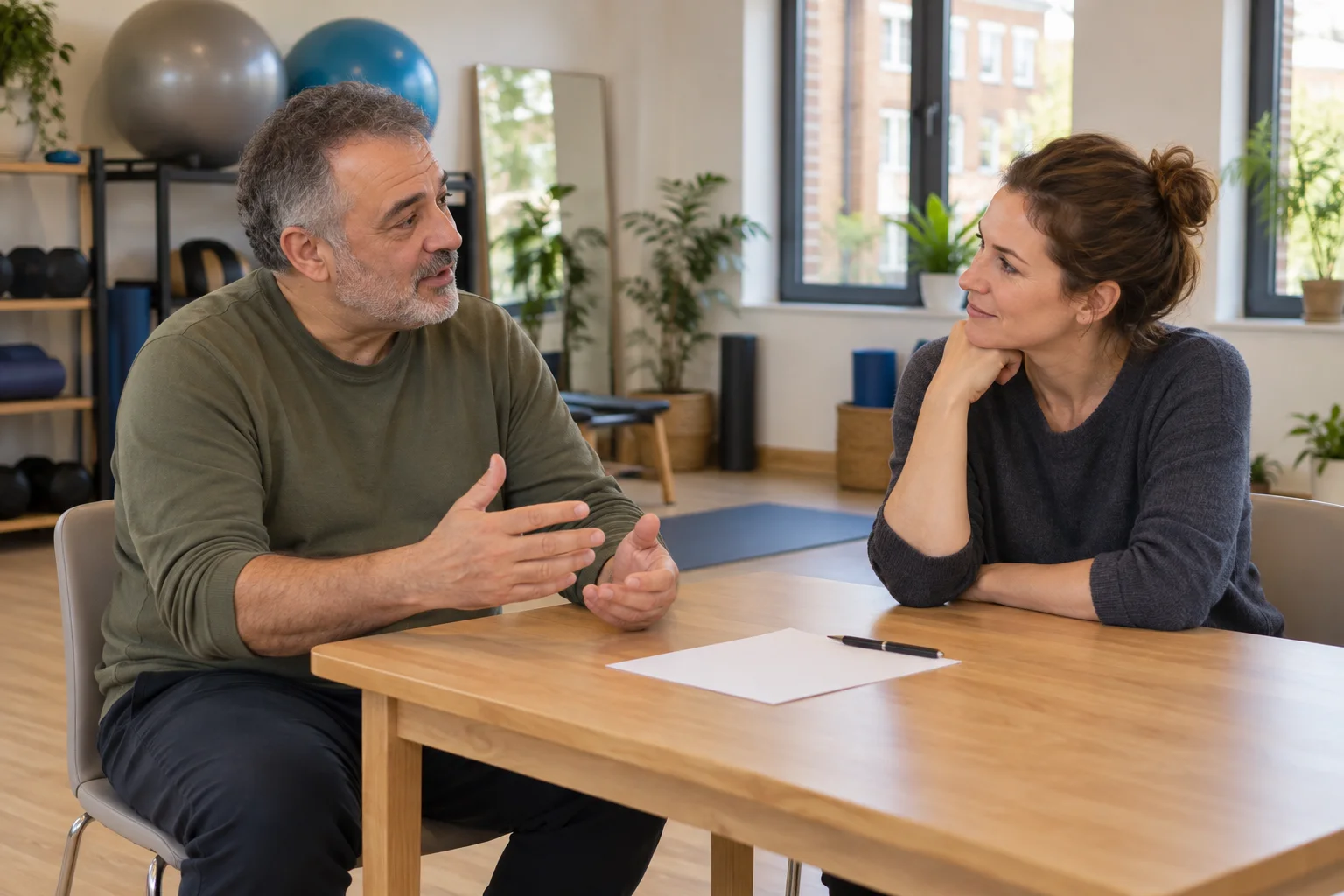
A stroke can affect people differently. One person may be working on walking or transfers; another may have changes in one arm, balance, sensation, vision, speech, memory, mood or fatigue. Some people have more than one of these changes. Previous health conditions, medicines, home access, confidence and support from family or carers can also influence what is practical.
That is why there is no single “next exercise” that is suitable for everyone after a stroke. The stroke team can consider medical stability, goals, current ability, fatigue, pain, communication needs and any equipment or assistance that may be required. NICE advises that rehabilitation sessions take account of medical needs, including post-stroke fatigue, and that special arrangements may be needed for communication or cognitive difficulties.
Physical activity can be part of a person’s longer-term routine, but an activity that looks simple may still need adapting. A chair, rail, walking aid or another person’s support may be important for one individual and unnecessary for another. Those choices should be made with the relevant professionals rather than inferred from a photograph or a general article.
When someone wants to continue exercise outside their rehabilitation sessions, the question is not only “Which activity?” It is also “Who has assessed this, what information does the provider need, and how will the plan be reviewed?” The answers help keep the person’s own goals and support needs visible.
NICE says that people who are able to walk and medically stable should be assessed for cardiorespiratory and resistance training that fits their individual goals. It recommends that a physiotherapist starts this training and gives instructions for continuing independently. Where an exercise provider is involved, the physiotherapist should give the provider necessary information about interventions and adaptations. The aim is for the programme to be safe and tailored to the person’s needs and goals. This is guidance for care planning, not a self-check that someone can use to clear themselves for exercise. See NICE guideline NG236 on stroke rehabilitation.
In practice, a handover may involve written instructions, a conversation between professionals or a joint visit, depending on the person’s needs and abilities. The exercise provider should know what they are qualified to do, follow the agreed adaptations and refer clinical questions back to the stroke team. A trainer should not change a rehabilitation plan, advise on medicines or diagnose the cause of a new symptom.
Bring questions to a physiotherapist, stroke clinician or other member of the treating team. If speaking is difficult, ask whether you can write questions down, use communication support or bring someone you trust. The person who had the stroke should be involved in decisions wherever possible.
These questions are a conversation checklist, not a screening tool. A trainer cannot use them to diagnose, clear someone for exercise or replace an assessment by the relevant healthcare professional.
Imagine that getting up from a chair more comfortably is important to someone. Their rehabilitation team may first discuss the goal, observe the task and consider what support or adaptations are needed. If the team decides that additional exercise coaching is appropriate, it can explain what the provider should follow. The provider’s role is then to coach within that agreed scope and report concerns back through the right route. This illustrates coordination; it is not a recommendation that every person practise chair transfers or use the same approach.
Another person may value reaching for kitchen items, returning to a hobby or taking part in a community activity. Goals can be practical and personal. A session should reflect what the individual and their care team have agreed, not an assumed recovery timeline or a promise of a particular result.
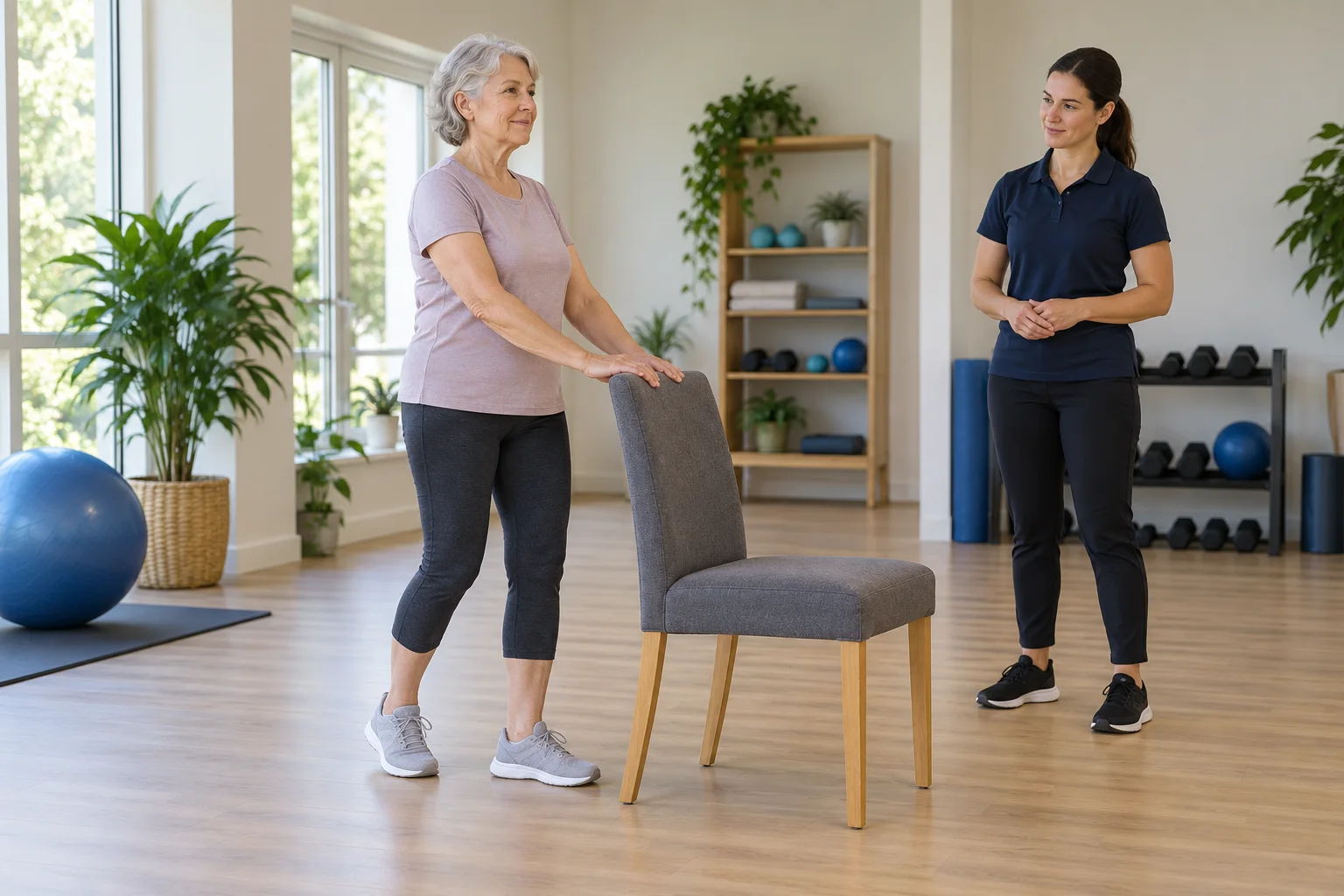
Progress after stroke is not always a straight line, and it is not measured by one movement alone. The NHS notes that recovery differs between people and may continue over a long period. If it helps, keep a short record of activities already agreed with the team: what was practised, what support or equipment was used, how manageable it felt and any concerns afterwards. Share that information at a review rather than increasing difficulty or changing the plan on your own.
Goals may also need to change as daily circumstances change. A new home setup, altered energy levels or a different support arrangement may affect what is practical. The NHS says that people should receive a review of their progress at about six months after stroke; if that review has not happened, its guidance advises speaking to the team. Check the NHS recovery guidance and follow-up information.
If someone develops sudden new signs of a stroke, call 999 immediately. The NHS FAST signs include facial weakness, arm weakness and speech problems; symptoms can sometimes stop after a short time and still need urgent medical attention. Read the NHS stroke symptoms and emergency advice.
For other new, worsening or worrying symptoms during a planned activity, stop and follow the advice given by the person’s treating team. If you are unsure which service to contact, use the local NHS advice route provided to you. This article cannot assess an individual or determine what is safe for them.
Some people may continue an agreed programme independently, but the decision and instructions should come from the relevant rehabilitation professionals. NICE says physiotherapists should provide necessary information and adaptations when an exercise provider is involved so the programme can be safe and tailored to the individual.
No. Stroke effects, goals, medical needs and home circumstances differ. A professional who knows the person’s plan can discuss suitable activities and adjustments.
No. A personal trainer can coach exercise within their training and agreed scope. They do not replace stroke rehabilitation, diagnose medical conditions or decide on clinical suitability. Questions about symptoms or changes to a rehabilitation plan belong with the treating team.
Recovery varies, and an online article cannot predict an individual timeline. Tell the rehabilitation team what feels difficult and ask whether goals, support or the plan should be reviewed. The NHS recovery guidance recommends speaking to the team if a follow-up review has not taken place.
If you and your care team decide that a separate exercise provider is appropriate, ask what information that provider needs and how the agreed adaptations will be communicated. You can also ask the provider about their qualifications, experience, scope and how they handle clinical questions.
Exercise after stroke rehabilitation should fit the person’s own goals and agreed care plan. Start by asking the stroke team what is appropriate, who should introduce it and how a community provider can receive the necessary guidance. If your team recommends exploring additional exercise support, read about exercise referral and the stroke rehabilitation service, then confirm directly with the service how it can work alongside your treating team.

 October 30, 2026 - BY Admin