
STRENGTH · MOBILITY · PERFORMANCE
Strength Training for Complete Beginners: Where to Start
A practical UK beginner’s guide to choosing simple movements, building a repeatable week and progressing at a pace that suits you.
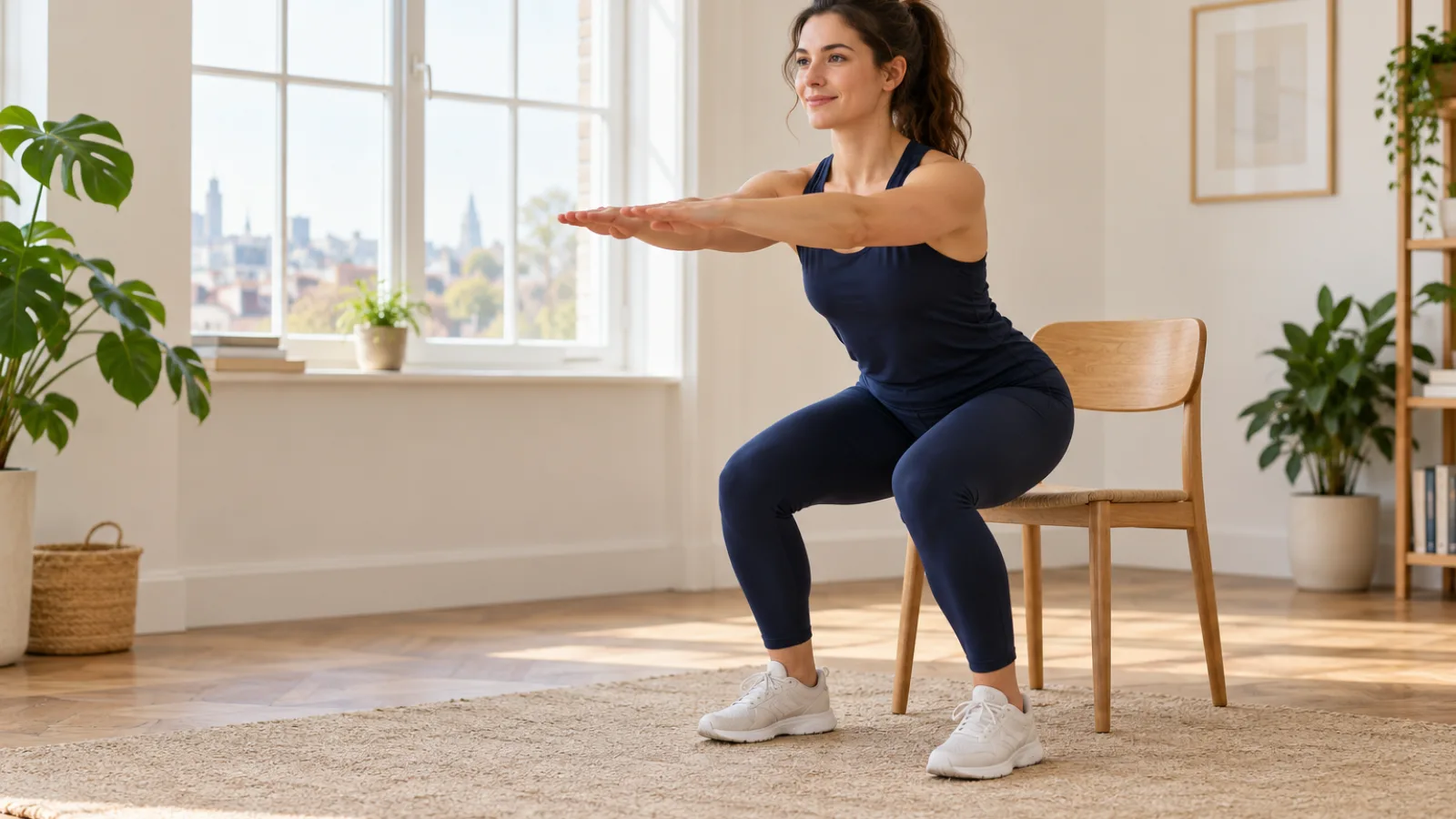
Strength training for beginners is simply a way to practise movements against a manageable resistance. You do not need a gym membership, a complicated programme or heavy weights to begin. A chair, a clear wall and a light resistance band can offer useful starting points. UK guidance recommends strength work for the major muscle groups on at least two days a week, while also recognising that doing some activity is better than none. Treat that as a direction to build towards, not a test you must pass on day one.
What counts as strength training?
Strength training is any activity that makes your muscles work harder than usual. That might mean standing up from a chair with control, pressing against a wall, using a resistance band, lifting a light weight or working with gym equipment. The tool is less important than choosing a version you can perform steadily and repeat consistently.
The UK Chief Medical Officers’ guidance says adults should work the major muscle groups on at least two days a week. It also says any strengthening activity is better than none. The weekly recommendation is a useful destination; someone returning after a long break may sensibly begin with less, then build gradually as confidence and capacity allow. Strength sessions are one part of an active week, alongside walking, cycling, daily movement and rest.
There is no single “correct” beginner exercise list. A useful session can include a leg movement, a push, a pull and a hip movement, adjusted to the person. Everyday actions such as carrying shopping or climbing stairs can also involve muscular effort, although a planned routine makes it easier to repeat and track what you practise.
Who can start strength training?
Many adults can begin with simple, low-load movements, including people who are new to exercise or returning after time away. Starting points differ: age, confidence, mobility, available space, previous experience and health all affect what feels appropriate. A beginner is not necessarily someone who is unfit; it may simply mean learning a new movement or returning to training after a change in routine.
If you are unsure whether exercise is suitable, or you have a health condition, an injury, new symptoms, are feeling unwell, or have recently had an operation or other health event, get advice from a healthcare professional before trying a new routine. Stop if you become unwell or experience pain that concerns you. A personal trainer can help with exercise choices and coaching within their professional scope, but does not replace diagnosis or treatment from a clinician.
For someone considering one-to-one training, Jessica’s approach at Body Brokers is an individual service rather than a fixed workout for every person. A first conversation can help you explain what you want to work on, what you have tried and what practical constraints matter. You can ask how the coach adapts exercises, what the session involves and whether your needs sit within the service. You do not need a trainer to start, but individual coaching may help when you value feedback, structure or an adaptable plan.
Three beginner movement examples
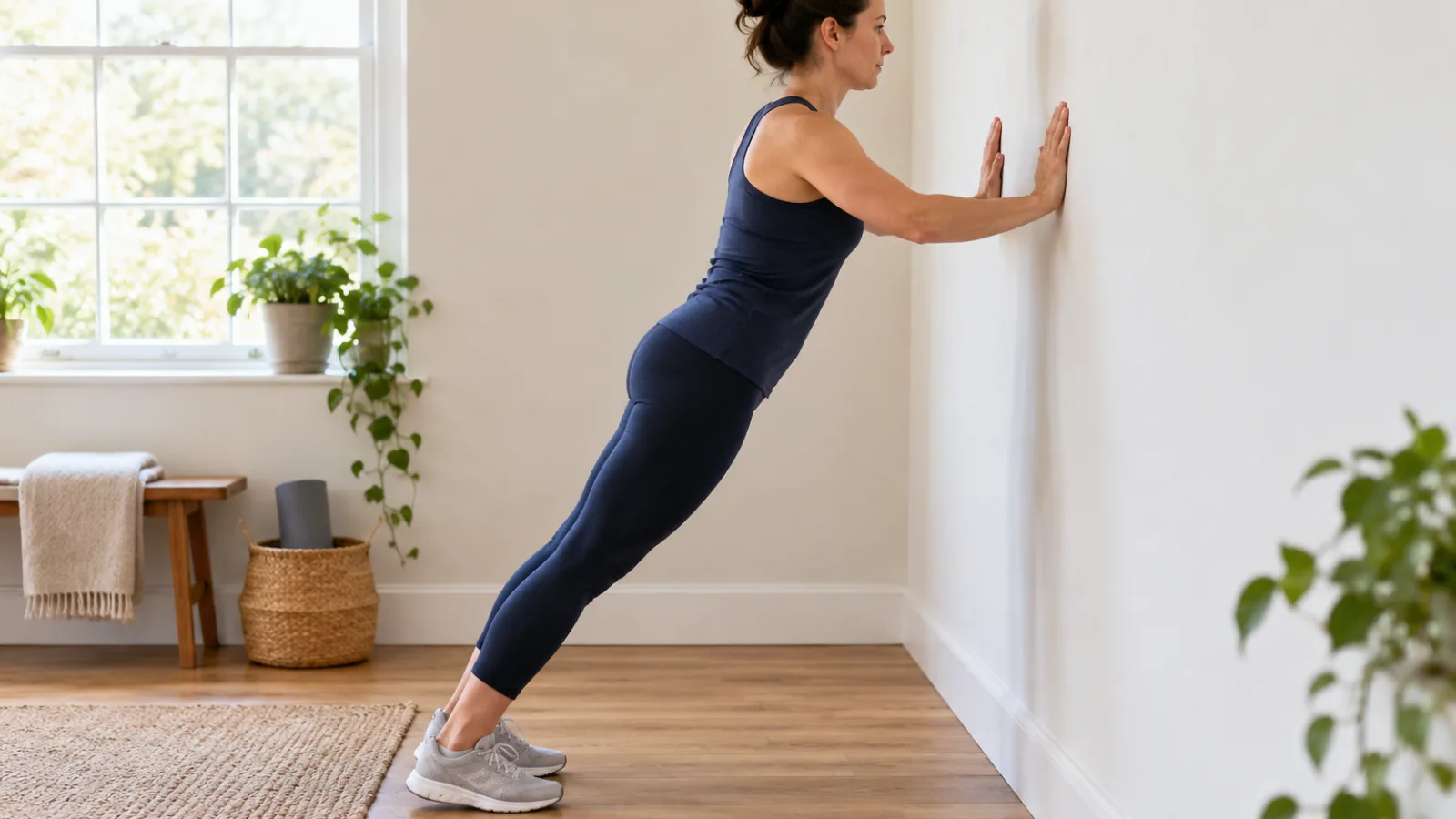
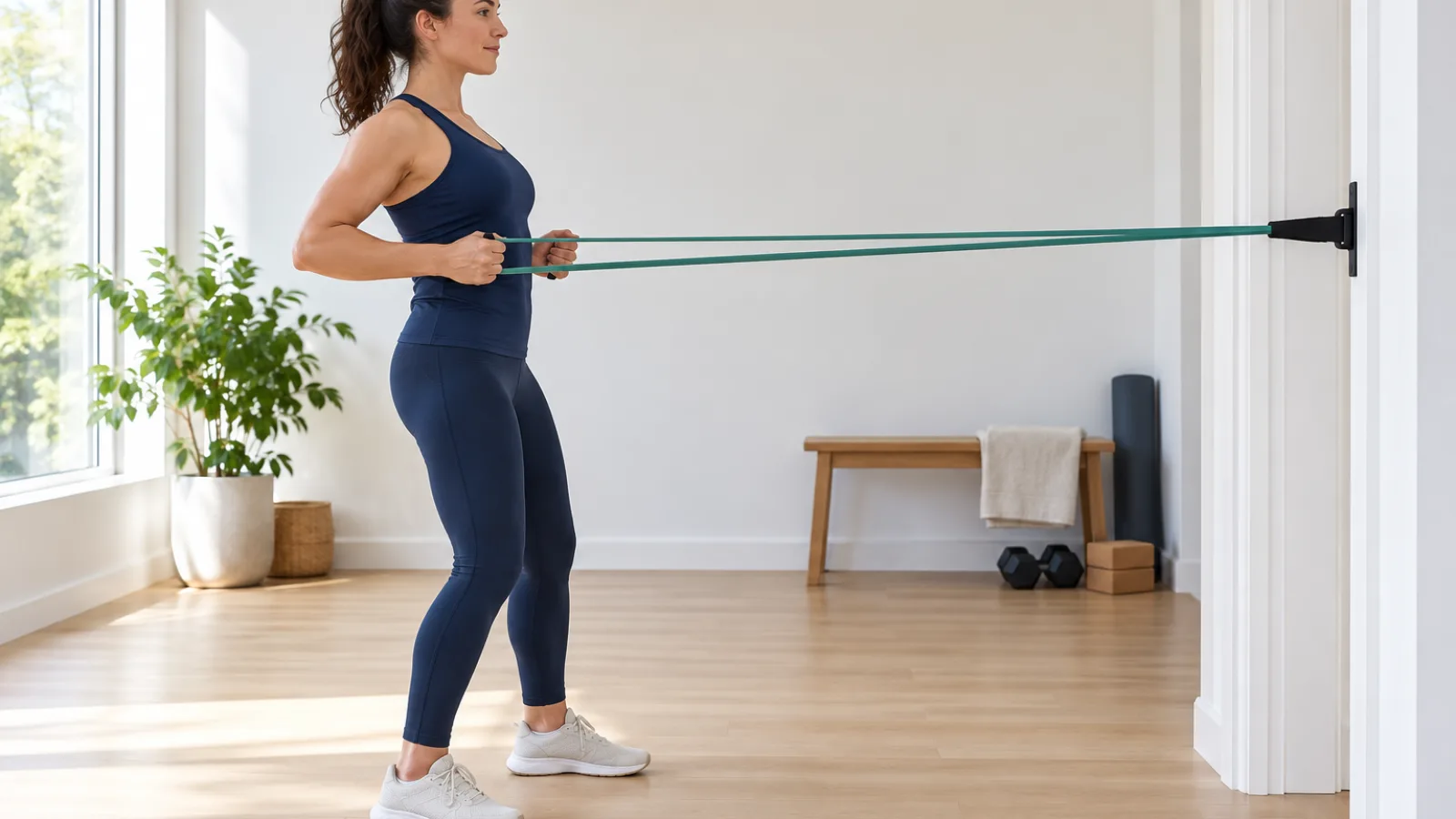
These images are generated illustrations for learning, not photographs of Jessica or Body Brokers clients. They show examples, not a prescribed workout. Use a comfortable range and a stable setup; if a movement does not feel right for you, choose an easier option or ask a qualified professional for help.

2. Wall press-up. Place your hands on a clear, stable wall at a comfortable height. Step back enough to lean in slightly, then press away without rushing. Standing closer to the wall usually makes the movement easier; moving farther away can increase the challenge. Keep the version smooth rather than chasing a particular number of repetitions.
3. Resistance-band row. A row practises pulling: secure a suitable band according to its instructions, keep the anchor stable, and draw your elbows back in a controlled way. Check the band for damage and avoid placing your face in line with it. If you do not have a secure anchor, choose another pulling option with a trainer rather than improvising.
Other patterns can be introduced gradually. For example, a hip hinge can be rehearsed by moving your hips towards a wall behind you, while keeping the movement small and comfortable. A light carry can practise holding and walking with an object that is easy to manage. These are options to discuss, not a checklist that everyone must complete in every session.
A simple weekly rhythm
A practical starting week is one you can repeat. The diagram below shows two strength days with time between them, plus space for ordinary movement. It is an example of organisation, not a medical prescription or a promise of results. If two sessions feel like too much at first, begin with one manageable practice session and build when ready.
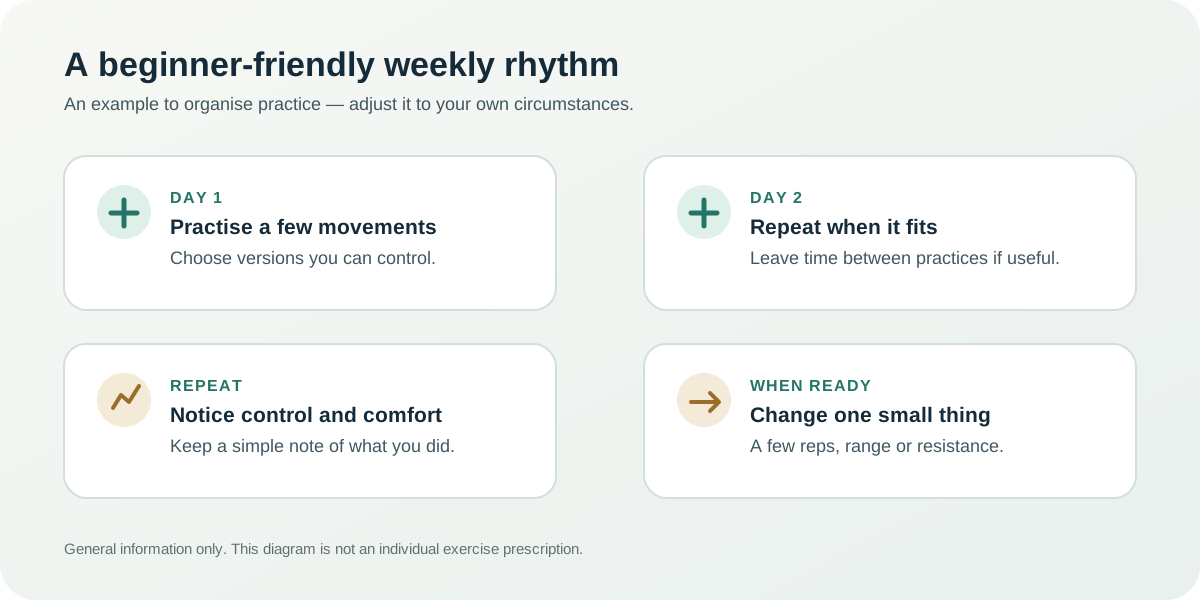
For each practice session, pick a small number of movements you can set up safely. Start with an easy version and pause between efforts as needed. You might use a chair squat, a wall press-up and a band row, then add another movement later. The NHS also recommends building up slowly; its chair-based examples include sit-to-stands and mini-squats. Its guidance is a helpful reference for general ideas, but it cannot assess your individual circumstances.
How to progress without guessing
Keep a short record: movement, version, repetitions or time, and how manageable it felt. You could use words such as “easy”, “steady” or “hard but controlled”; there is no need for a complicated tracking app. If you repeat a movement and it feels more controlled, that is useful information even when the weight or number has not changed.
When the current version feels repeatable, change one thing at a time. For example, add a small number of repetitions, use a slightly larger comfortable range, move your feet a little farther from the wall, or choose a slightly stronger resistance band. Keep the change small enough that you can still control the exercise. If technique becomes rushed or the movement starts to feel uncomfortable, return to the previous version.
Progress is not a straight line. Work, sleep, stress, illness and other demands can affect how a session feels. Repeating the same manageable session, shortening it or taking extra recovery time can be a sensible adjustment. Jessica can help a Body Brokers client decide what to practise and how to adapt it to their goals and preferences; the plan should remain responsive to the person rather than the calendar.
Common beginner mistakes to avoid
- Starting with too much. A long routine can be hard to repeat. Begin with a few movements and add only when the current plan fits your week.
- Changing everything each session. Repeating a movement makes it easier to notice whether setup and control are improving.
- Thinking every set must end in failure. Current ACSM guidance does not find that average healthy adults need to train to momentary muscle failure or use a complex periodised programme to gain benefit. A controlled, repeatable effort is a reasonable place to start.
- Using soreness as a score. Soreness is not a reliable measure of whether a workout was useful. Increase gradually and pay attention to how you feel, not just how tired you are.
- Copying someone else’s exercise choices. A movement that works for one person may not suit another person’s experience, body, space or health context.
What current evidence can—and cannot—tell beginners
In March 2026, the American College of Sports Medicine published an updated resistance-training position stand. Its evidence synthesis covered 137 systematic reviews representing more than 30,000 participants. ACSM reported that consistency matters and that, for the average healthy adult, no one equipment type, training to failure or complex periodisation was consistently necessary across outcomes. This supports a straightforward message: a routine you can perform and repeat can be more useful than waiting for a perfect gym or elaborate plan.
That research is a broad evidence summary, not a prediction for an individual, and its scope is healthy adults. It does not tell you which exercise is safe for a particular injury or medical condition, or guarantee a specific change in strength, appearance or health. The UK CMO guidance is the appropriate national reference for the public-health recommendation of strength work on at least two days a week. Use both sources as context, then adapt the practical details to your own starting point.
We have not used a claimed keyword search volume or Body Brokers’ private website analytics in this article. The plan labels the topic as an evergreen hypothesis, and its search demand has not been validated in Google Keyword Planner or live Google Trends. The evidence figures above describe published research, not traffic, client outcomes or a forecast of rankings.
Questions beginners ask
Do I need a gym to start strength training?
No. Bodyweight movements, a stable chair and a wall can provide simple starting options. A resistance band or weights offer other choices, but equipment is not a prerequisite. Pick an option that you can set up safely and repeat.
How many days a week should a beginner train?
The UK guidance recommends strengthening the major muscle groups on at least two days a week for adults. If you are starting from very little activity, you can build towards that gradually. Your appropriate starting frequency depends on your circumstances and recovery.
Should I expect to feel sore after every session?
No. Soreness is not required to show that a session was worthwhile. A useful early marker is whether you can repeat the movement with control and recover well enough to continue your routine.
Can I start if I have an injury or long-term condition?
Possibly, but a general article cannot determine what is suitable for you. Ask your GP, physiotherapist or relevant healthcare professional for advice, especially if symptoms are new, worsening or linked to a recent health event. A trainer can work within their qualifications and the advice you have received, but should not replace clinical care.
When might one-to-one coaching help?
It may be useful if you want feedback on movement, help choosing a starting level, or a routine shaped around your preferences and practical constraints. You can ask Jessica what a first conversation covers, how exercises are adapted and whether your goals fit Body Brokers’ service. You can also begin independently with trusted public guidance if that better suits you.
A steady first step
Choose a movement you can control, set a time you can realistically repeat, and write down how it felt. Build your routine one small decision at a time. If you would like individual support, read about private training with Jessica or review the published qualifications, then ask questions before deciding what is right for you.
Evidence and further reading: UK Chief Medical Officers’ physical activity guidelines; ACSM’s 2026 resistance-training update; NHS strength exercises.