Private personal training and a commercial gym membership are different ways to access exercise support, but they are not opposites. A trainer may work in a shared gym, while private coaching may take place in a studio, at home or another agreed venue. Compare the setting, coaching, access and full cost—not which option sounds more exclusive.
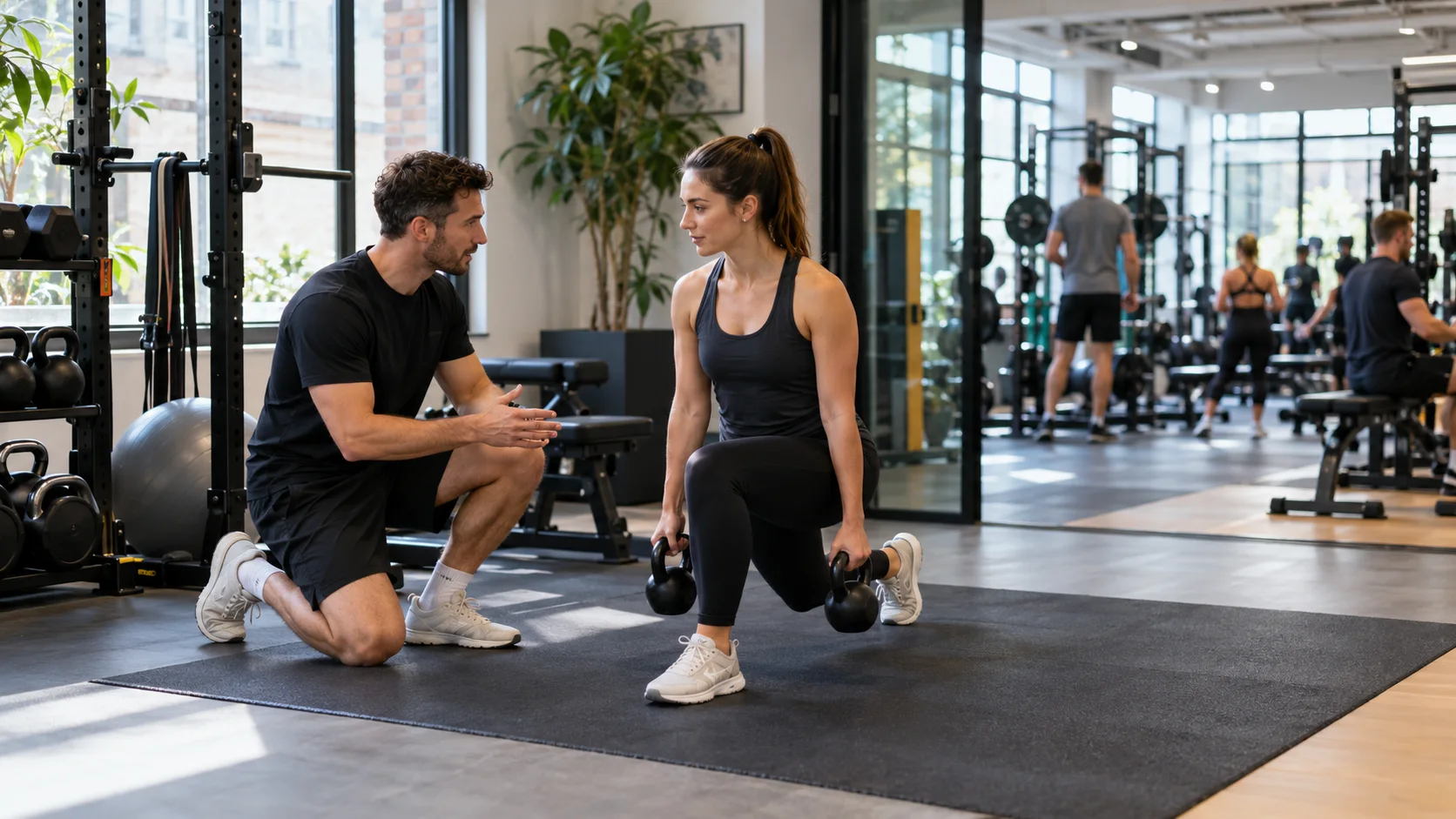
“Private personal training” describes an individual coaching arrangement; “commercial gym” usually describes a venue and membership model. A trainer can coach you in a shared gym, and a one-to-one session does not automatically reserve the whole building or room. A gym may also sell coaching alongside membership.
Ask whether the price covers coaching, gym entry, or both. Check whether you can use the venue outside appointments, who chooses the location and whether other members will be present. A clear answer is more useful than relying on the word “private”.
Professional standards give another useful point of comparison. CIMSPA’s Personal Trainer standard describes coaching on a one-to-one or small-group basis, including planning and delivering personalised exercise programmes and instruction. It also recognises the importance of working within scope and referring to other professionals where appropriate. Read the current CIMSPA professional standards library, then ask any trainer how their qualifications and experience relate to the service they offer.
In a one-to-one appointment, the coach can focus on the goals and preferences you bring. That may suit someone who wants help learning equipment, planning a routine or keeping a regular appointment. The value depends on the coaching and whether it fits your needs; it does not guarantee faster progress or a particular result.
Ask what happens between sessions, whether independent practice is expected and how a plan is reviewed. If privacy matters, say what you mean: a one-to-one conversation, a quieter area, changing facilities or limits on photography. Confirm what the venue can provide.
A gym membership can provide access to equipment and facilities for independent training. If you value choosing your session time, using different equipment or exercising around other people, a shared venue may suit you. Classes, inductions and coaching may be included or separately priced, so check the membership details.
Visit at the time you would normally go. Check equipment sharing, booking rules, layout and whether the environment feels comfortable. If you want a trainer there, ask whether you can choose the coach or must use the facility’s team. You can also combine a membership with occasional coaching.
| What matters | Questions for one-to-one coaching | Questions for a gym membership |
|---|---|---|
| Coaching | Who will coach each session, and what support is included? | Is coaching included, optional or separately priced? |
| Access | Can you use the venue outside booked sessions? | Which locations, hours and facilities does the membership cover? |
| Privacy | Will other members be nearby? Is any room exclusive? | Can you visit at a quieter time or choose a less busy area? |
| Cost | Does the quote include venue fees, travel or equipment? | Are there joining, access, class or cancellation charges? |
| Flexibility | How are sessions booked, changed or cancelled? | Can you pause or end membership, and what notice is needed? |
For either option, compare the written terms: total cost, payment schedule, minimum commitment, cancellation rules and what happens if a venue or coach is unavailable. Policies differ between providers.
A first enquiry should help you understand whether the service is suitable, not pressure you into buying a package. These questions work for Body Brokers or any provider:
Make a short list of your priorities before the conversation. You might care most about location, a coach’s attention, cost, opening hours or the ability to train independently. Rank them, then compare the answers against that list.

For London training, include the journey in your decision. Check the route, entrance, stairs or lift, changing facilities and transport at the time you would attend. Describe any access or privacy requirement and ask the venue to confirm it.
Body Brokers’ private-client service page and London gym and location information are useful starting points. They do not confirm that a particular room, time or arrangement is available. Contact Jessica directly to discuss your preferred area, the session format and current terms before travelling or making a payment.
Compare the actual journey and weekly schedule rather than assuming one option is automatically easier.
There is no universal price comparison. Costs depend on the provider, location, session frequency, membership and what is included. Compare the total you would pay over the period you expect to use the service, including any venue or travel fees, and check cancellation terms.
No. One-to-one describes the coaching arrangement, not an exclusive room. Ask who may be present and what privacy the venue can offer.
Ask about single-session or shorter options. A suitable commitment depends on your schedule and budget; read cancellation and expiry rules before agreeing.
Ask for the qualification, awarding organisation and any relevant professional status. CIMSPA’s standards describe the role; the trainer should explain how their training fits the service and your goals.
Tell the provider what is relevant and ask whether the service is within the trainer’s scope. A personal trainer is not a substitute for diagnosis or healthcare. If you need individual clinical advice, speak with an appropriate healthcare professional and ask how exercise support should fit around their guidance.
Private coaching and a commercial gym can both be useful, and they can be combined. The better fit is the one whose coaching, setting, access, privacy, cost and terms match your circumstances. Ask questions, compare written details and take time to decide.
To explore Body Brokers’ private-client arrangements, share your preferred London area, schedule and goals. Discuss the venue and full terms directly with Jessica before confirming.
Discuss your requirements with Jessica
Sources and transparency: CIMSPA’s professional standards library is linked for the description of a personal trainer’s role and scope. Body Brokers’ service and location pages describe its current arrangements; confirm availability and terms directly. The two generated illustrations do not depict a real Body Brokers session, venue, trainer or client.

 October 28, 2026 - BY Admin