“Mobility” and “stretching” are often used together, which can make it hard to know what to work on. In everyday coaching, mobility training usually means practising controlled movement through a comfortable range; stretching usually means placing a muscle or surrounding tissues under a gentle lengthening tension. The ideas overlap, and neither label guarantees a particular result. This guide explains the difference in practical terms, how to choose a starting point and how to progress without turning a general movement session into a personal prescription.
Mobility is a practical description of how you move into and through a position. A mobility exercise might ask you to slowly turn your upper back, raise an arm, or move a hip while keeping the rest of the body steady. You are using your own muscles to guide the movement and notice what feels smooth, restricted or difficult to control.
Mobility sessions may include controlled circles, reaches and bodyweight movements. Some drills also involve strength or balance. Definitions vary between coaches, so ask what a particular exercise is intended to practise.
Mobility does not mean forcing a joint to its maximum possible range. A useful range is relevant to your daily activities and training, and it may look different between people. A trainer can help with exercise technique, but a persistent symptom or a new loss of movement should be discussed with an appropriate healthcare professional.
Stretching is a broad term for movements or positions intended to create a lengthening sensation in a muscle or nearby tissues. In a static stretch, you ease into a position and stay there for a short time. In a dynamic stretch, you move in and out of a comfortable range. Some stretches are active, where you use your own muscles to hold the position; others use gravity, a wall or another support.
Stretching can be part of a warm-up, cool-down or flexibility routine. Keep it controlled and manageable. The NHS gives examples of gentle flexibility exercises and advises building up slowly. An injury, health condition, pregnancy or other individual circumstance may mean a movement needs adapting. Read the NHS flexibility exercise guidance.
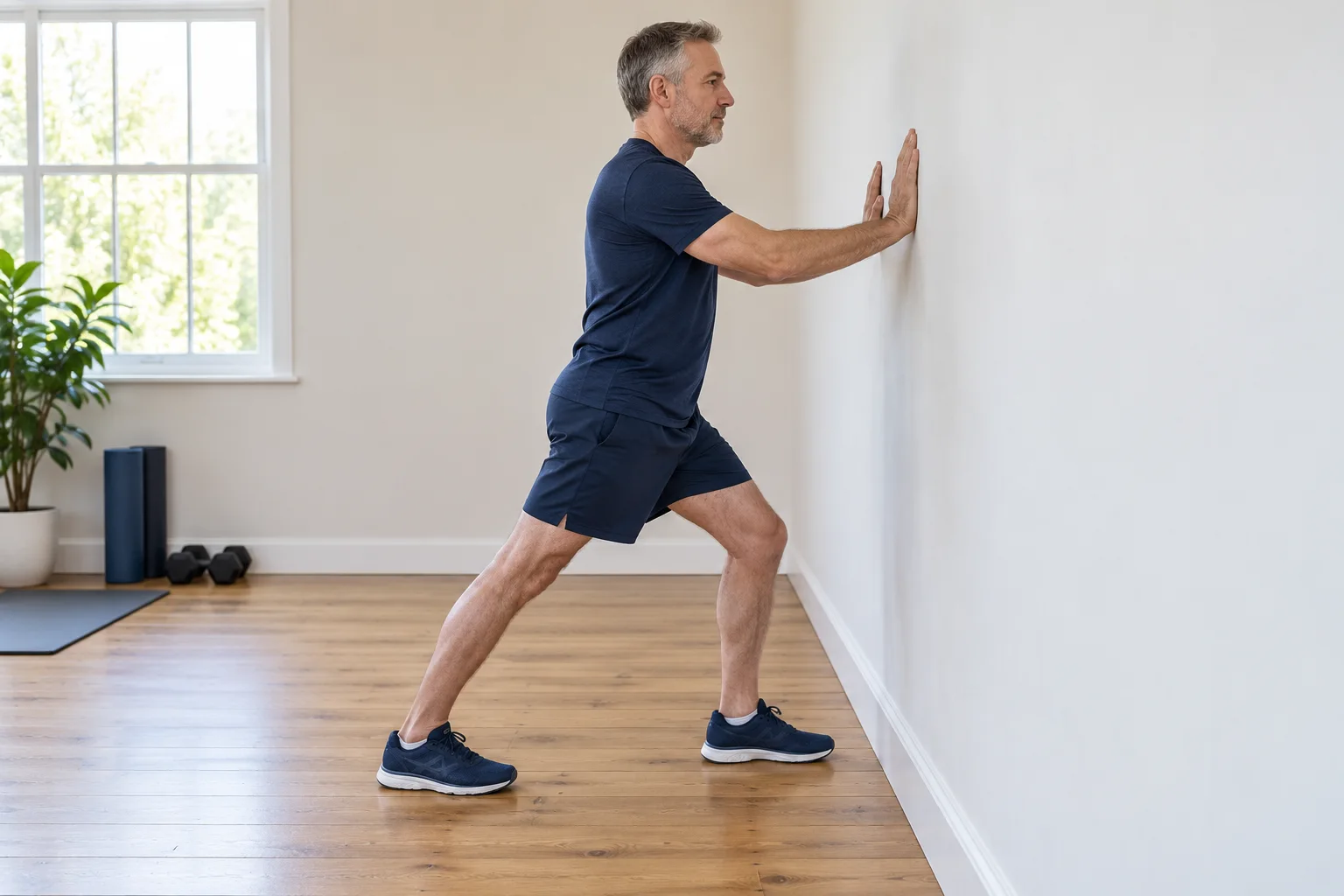
Think of the difference as emphasis, not a strict boundary. A calf stretch against a wall creates a sustained lengthening sensation. Gentle ankle rocks practise controlled motion. Either may feel like a stretch, depending on the person and range.
A reaching movement may be both a dynamic stretch and a mobility drill. A comfortable squat can involve mobility, balance and strength. A session can combine movements to suit its purpose and the person.
Either approach may suit people who want to practise comfortable movement as part of a broader activity routine. Someone who sits for long periods might choose gentle standing movements before a walk; someone else may prefer a stretching routine. These are examples, not guaranteed outcomes.
Different bodies have different histories, preferences and ranges. A movement that feels simple for one person may be unsuitable or uncomfortable for another. Flexibility and mobility work also do not replace strength, balance or aerobic activity. The UK Chief Medical Officers’ guidance was refreshed in 2026; it continues to encourage suitable physical activity across life, including strength and balance work. See the UK physical activity guidance.
Imagine that reaching a high shelf is a task you would like to practise. A mobility-focused option could be a slow arm raise, staying within a comfortable range and noticing whether you can keep your trunk relaxed. A stretching-focused option might be a supported position that creates a mild stretch around the shoulder or chest. Both should be adapted to the person; neither is a test or a substitute for assessment when movement is painful or unexpectedly limited.
Another example is the ankle. A controlled forward-and-back ankle movement explores how the joint moves while you remain steady. A supported calf stretch creates a lengthening sensation in the lower leg. These are not diagnoses or corrective exercises; they simply illustrate the different emphasis. Images in this guide are general examples rather than an individual programme.
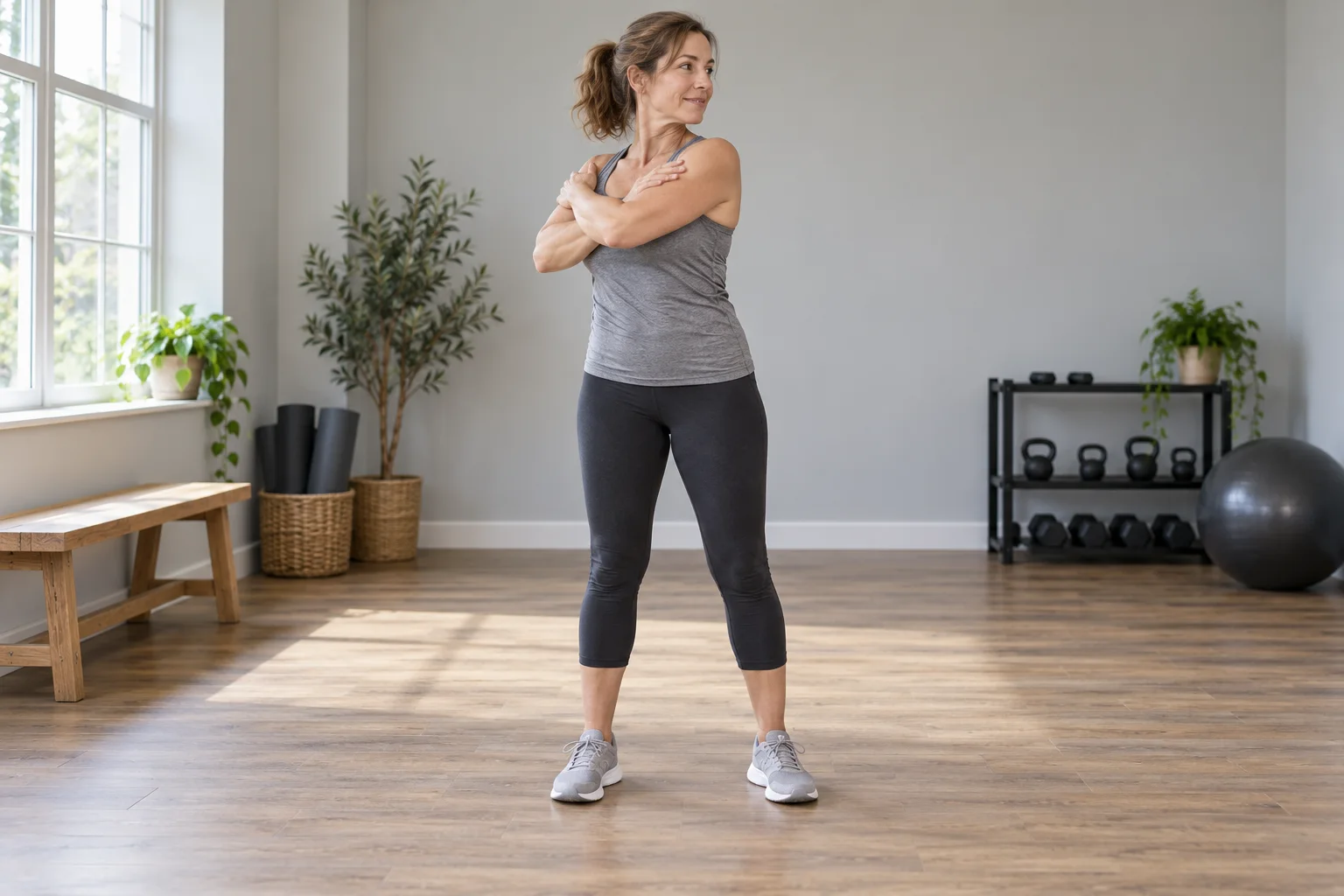
For a first session, choose one or two familiar movements and keep them easy to control. Use a stable support if it helps your balance. Move smoothly, breathe normally and stop or change the movement if it causes pain, dizziness, unusual shortness of breath or other concerning symptoms. Discomfort is not proof that an exercise is working.
Progress might mean improving control, exploring a slightly larger comfortable range, or practising more consistently. Change one feature at a time and note how the movement feels during and afterwards. Avoid forcing extra range just to make a number improve.
The NHS suggests gradually increasing repetitions in its routine. The wider UK guidance also recognises that activity can build over time. A qualified professional can help adapt movement to your goals and circumstances.
The example below is a flexible way to think about progression, not a required weekly schedule or a prescription.
| When | Possible practice | What to notice |
|---|---|---|
| First try | Explore one familiar, comfortable movement. | Can you stay relaxed and in control? |
| Another day, if suitable | Repeat it or choose a gentle stretch. | Does it remain comfortable during and after? |
| Later in the week | If appropriate, adjust one feature slightly. | Can you maintain steady breathing and control? |
This table is an illustration, not a plan for every reader. The 2026 guidance highlights that some activity is better than none and encourages building movement into everyday life. Individual goals and health needs still matter.
Neither is universally better. The right choice depends on what you want to practise, how the movement feels and whether it fits your wider activity routine. Some people use both in the same session.
Stretching may be one way to practise or maintain comfortable movement range. Mobility also involves controlling movement, and may include strength, balance or coordination. A coach can explain what a drill is designed to do.
It depends on the activity and your needs. A warm-up might include gradual movements relevant to the session; some people also include dynamic stretches. The NHS provides a separate general routine for stretching after exercise. If you have an injury or health condition, ask a healthcare professional or qualified instructor which movements are suitable.
Speak to a healthcare professional if movement is painful, symptoms are new or worsening, or you are unsure what activity is appropriate for you. A personal trainer can discuss exercise technique and general progression within their role, but cannot diagnose an injury or replace medical advice.
The practical difference is usually whether you are practising controlled movement, a lengthening sensation or both. Start with a manageable option and build gradually if appropriate. Explore private coaching or learn about our qualifications.

 October 29, 2026 - BY Admin