
JESSICA KREIMEYER · PRIVATE PERSONAL TRAINING · LONDON
Choosing a Private Personal Trainer in London: Jessica Kreimeyer’s Approach
Jessica’s published qualifications, her one-to-one London service and the practical questions every learner can ask before choosing a trainer.

Jessica Kreimeyer FCIMSPA is the founder of Body Brokers and works personally with its private clients. Her published qualifications span personal training, exercise referral, specialist exercise and rehabilitation-informed training. This guide explains what that background means, how Jessica’s London service is arranged and what anyone can ask when choosing a personal trainer. It also separates national activity evidence from individual outcomes: a survey statistic cannot tell you whether you need a trainer or predict what a particular programme will achieve.
Who is Jessica Kreimeyer?
Body Brokers identifies Jessica Kreimeyer FCIMSPA as its founder and the professional who works directly with private clients. The published service description says sessions are shaped around a person’s goals, current fitness, experience, lifestyle and physical requirements. That is a useful starting point for understanding the service: it is presented as one-to-one training, with exercise support adapted to the individual, rather than a fixed class or a standard plan sold to everyone.
That description is about how the service is set up; it is not a promise of a particular result. A client’s progress depends on many factors, including the person’s circumstances, the agreed plan, consistency, recovery and any relevant clinical guidance. A careful first conversation should make those limits clear and help both sides decide whether the service fits.
Jessica’s published profile presents a professional background across conventional personal training, exercise referral and further specialist education. Readers can review the About Jessica profile and the more detailed qualifications list directly. Those pages are the best place to check the latest wording and dates.
What Jessica’s qualifications cover—and what they do not
The Body Brokers qualifications page lists Jessica as FCIMSPA and records several professional qualifications. Among them are Personal Trainer Practitioner, Exercise Referral Practitioner, Gym Instructor Practitioner and Group Exercise Instructor Practitioner. It also lists a VTCT Level 4 Certificate in Exercise for Management of Low Back Pain and Functional Rehabilitation and Exercise Training After Stroke through Middlesex University and ARNI.
The same page records further learning in areas including cardiac and cardiovascular health, sciatica, Alzheimer’s fitness and other exercise-related subjects. A course title can help a reader understand the topics a professional has studied, but it should not be treated as proof that every person or condition is suitable for the service. Ask what the qualification covers, how recently relevant skills have been updated and what the trainer would refer elsewhere.
CIMSPA publishes occupational standards for roles in the UK sport and physical activity workforce. For any trainer, those standards offer a useful reference point when discussing role expectations and scope. A title or membership postnominal does not replace checking the exact qualification, current status, insurance and experience relevant to your needs. Read CIMSPA’s professional standards.
For people returning to exercise after an event or living with an ongoing health concern, the distinction between exercise support and healthcare matters. A personal trainer does not diagnose a condition or replace a doctor, physiotherapist or other regulated clinician. Jessica’s listed specialist education may be relevant to a conversation about exercise, but the appropriate support and boundaries should be agreed for the individual case. If a clinician is already involved, ask how the trainer can work alongside that advice and what information you are comfortable sharing.
How Body Brokers arranges one-to-one training with Jessica
According to the private personal training page, Jessica works personally with each client and training can address goals such as strength, general fitness, performance, mobility, returning to exercise and maintaining physical capacity. The page describes an individual service, not a prescribed routine for every client. It also notes that appointments are arranged directly with Jessica rather than through an online booking system.
That direct contact gives a prospective client a chance to establish practical details before committing. Explain what you would like help with, what training you have done before, which days and areas work for you and any relevant limitations or preferences. You can then ask what is possible, what the proposed session includes and what further information is needed. The conversation should not require you to disclose more personal health information than is relevant to deciding whether the service is suitable.

It is reasonable to ask how the plan will be discussed and reviewed, what happens if your availability changes and how a session can be adapted when an exercise does not feel appropriate. These are sensible questions for Jessica or any trainer; they are not a claim that a specific assessment or review protocol is included in every Body Brokers appointment.
Choosing a London setting: privacy, access and travel
Body Brokers lists appointments from 106 Harley Street, Waterloo, selected Solo Gyms and other suitable private London locations. Home visits may be considered where appropriate. The exact venue depends on the type of session, suitability and availability, so confirm the address and arrangements directly with Jessica before travelling. The website describes 106 Harley Street as an appointment location; it does not claim that Body Brokers owns the premises.
“Private personal training” can describe one-to-one coaching without guaranteeing that an entire gym or room is exclusively yours. Ask who else may use the space, whether changing facilities are shared, what equipment is available and whether the location is accessible for you. If discretion matters, say exactly what privacy means in practice for you.
Travel is part of whether a plan is realistic. Think about the journey from home or work, the time you can allow around the session, transport changes and whether you will be in London regularly or only for a short visit. The London locations page gives a starting point, but it cannot confirm a particular room or appointment slot. Ask about the full arrangement, including any venue charge, before agreeing.
What the latest activity data can—and cannot—tell you
The latest Sport England Active Lives Adult Survey covers November 2024 to November 2025. It reports that 64.6% of adults in England—about 30.9 million people—met the survey’s “active” threshold of at least 150 minutes of moderate-intensity physical activity a week. It classifies 24.7% as less active, averaging under 30 minutes weekly, and 10.7% as fairly active, averaging 30 to 149 minutes. These are national figures for adults aged 16 and over, not a count of London personal-training clients.
Sport England says the report drew on 176,326 valid responses. That scale makes it useful for describing broad participation across England, but it still cannot tell you whether a personal trainer is necessary, what Jessica’s clients achieve or what will happen in an individual session. It is context for a public-health discussion, not evidence of Body Brokers results. The survey summary and activity breakdown and technical summary and survey method are available from Sport England.
For general context, the NHS says adults should aim for at least 150 minutes of moderate-intensity aerobic activity a week, along with muscle-strengthening activity on at least two days. The guidance is a population-level recommendation, not a personalised training prescription; a person’s circumstances can change what is suitable. Read the NHS guidance on strength and flexibility, and seek appropriate clinical advice if you have health concerns or have been asked to follow specific restrictions.
A practical checklist for Jessica—or any personal trainer
The same questions help first-time exercisers, people returning after a break and experienced trainees comparing options. They also help you assess whether a trainer’s style and service match what you actually need.
- Who will coach the sessions? Confirm whether the person you contact will deliver them, and how continuity is handled if plans change.
- Which qualifications fit my goals? Ask who awarded the qualification, what it covers and how to verify professional status. For a specific health or movement concern, ask about relevant education and boundaries.
- How will my starting point be understood? Discuss your goals, training history, preferences, schedule and relevant limitations. You should understand what information is being requested and why.
- What does one session include? Confirm length, type of coaching, equipment, preparation and whether any independent work between appointments is expected.
- Where will we meet? Ask for the exact venue, access details, privacy, facilities and whether any venue or travel fee applies.
- What is the complete cost and what are the terms? Check current fees, payment timing, cancellation or rescheduling rules, package expiry and any additional charges before paying.
- How would we review progress? Agree what progress means to you. It might involve consistency, confidence, a skill or a practical goal; there is no single measure that suits everyone.
- What happens if the service is not the right fit? Ask what alternatives, adjustments or referrals could be appropriate. A responsible trainer should be able to explain the limits of their role.
Compare answers side by side rather than relying only on a polished photograph or a dramatic before-and-after claim. A clear explanation of qualifications, availability, privacy, cost and boundaries is more useful when making an informed choice.
Common questions about personal training
Do I need to be fit before I contact a personal trainer?
No particular fitness level is required to ask questions. Tell the trainer what activity currently looks like for you and what you hope to change. The discussion should establish whether their experience and service are appropriate for that starting point.
How can I check a personal trainer’s qualifications?
Ask for the full qualification name, awarding organisation, date and any relevant professional membership. Check the awarding or professional body’s public information where available. Then ask how the qualification relates to your goals and what falls outside the trainer’s scope.
Does one-to-one training mean the whole gym is private?
Not necessarily. One-to-one describes the coaching relationship; exclusivity describes the room or venue. Confirm whether another member of the public, staff or other clients may be present and whether facilities are shared.
Can a personal trainer diagnose or treat an injury?
A personal trainer is not a substitute for a clinician and should not diagnose a medical condition. A trainer with relevant exercise education may be able to discuss appropriate exercise support within their scope. For a new, worsening or unresolved health concern, speak with a suitable healthcare professional and ask how exercise should fit around that advice.
How often should I train with a personal trainer?
There is no universal number. It depends on your goals, experience, availability, budget and what you are comfortable doing independently. Ask the trainer to explain the options and the role of practice between sessions rather than assuming a package size is necessary.
How much does private personal training in Central London cost?
Fees can depend on the session format, location and terms. Ask for the current total cost, session length, venue charges, travel costs if relevant and cancellation policy. Body Brokers asks prospective clients to contact Jessica directly for details about the arrangement being discussed.
What should I track to know whether training is helping?
Choose a small number of measures linked to your own goal. Depending on the person, that could be regular attendance, confidence with a movement, a functional task or a strength measure agreed with the trainer. Measurements are most useful when collected consistently and interpreted in context; a scale, a single test or a photograph alone cannot describe every kind of progress.
Do the NHS activity guidelines apply to everyone?
They are broad recommendations for the population. Age, health, disability, medication, pregnancy and professional advice can affect what activity is appropriate for an individual. Use the NHS page for general information and discuss personal concerns with an appropriate clinician.
Discuss your requirements directly with Jessica
If Body Brokers sounds relevant, send Jessica your goal, preferred London area, likely schedule and any practical requirements. Ask which location is available, what the session would include and the complete terms before confirming. You can also use the information here to compare other providers; a considered choice is one where the service, qualifications, setting and expectations are clear to you.
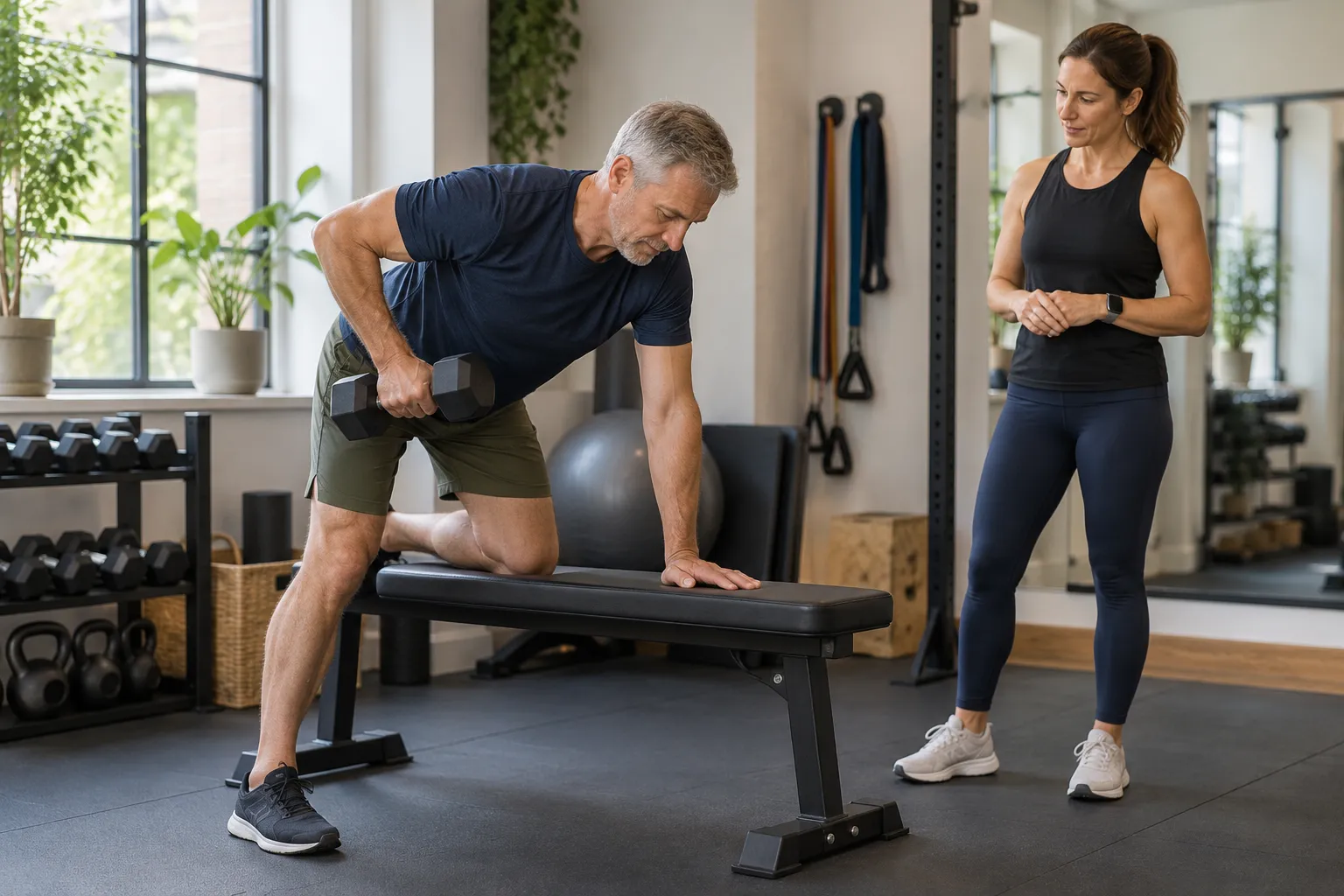
Sources and transparency: Jessica’s role, qualifications, services and locations are described on the linked Body Brokers pages. External evidence is linked to CIMSPA, Sport England and the NHS; those links are marked nofollow. The Active Lives figures describe adults across England and do not measure Body Brokers clients or London-only activity. All three photographs on this page are generated illustrations created for this guide. They do not depict Jessica Kreimeyer, actual Body Brokers clients, or a real appointment or venue.