Balance training for older adults is not one test or a single set of exercises. It can include activities that practise steady standing, stepping, turning and coordinating movement in ways that relate to daily life. Starting points vary widely: age alone does not say what will feel safe or useful to a particular person.
This guide explains the general idea, how UK guidance frames activity for older adults, and what to ask when extra support may help. It is educational information, not an assessment or an individual exercise plan. If you have concerns about falling, dizziness, pain, a health condition or a recent change in mobility, speak with an appropriate healthcare professional before trying a new balance challenge.
Everyday movement asks the body to adjust: standing from a chair, reaching for something on a shelf, turning to answer someone, stepping around a kerb or carrying a light item. Strength, balance, coordination, vision, attention, confidence and the environment can all affect how those activities feel. Practising suitable movement is one way to work on physical function; it does not guarantee that a fall will be prevented or identify why someone feels unsteady.
Balance can feel different across familiar and unfamiliar settings, or with fatigue, poor lighting, crowding or a particular task. Factors such as past injury, health conditions, medication, vision and hearing may be relevant. Age alone cannot explain why someone feels unsteady.
These generated scenes are illustrative, not client photographs, exercise prescriptions or evidence of a health result. Follow guidance suited to you rather than copying a pose.
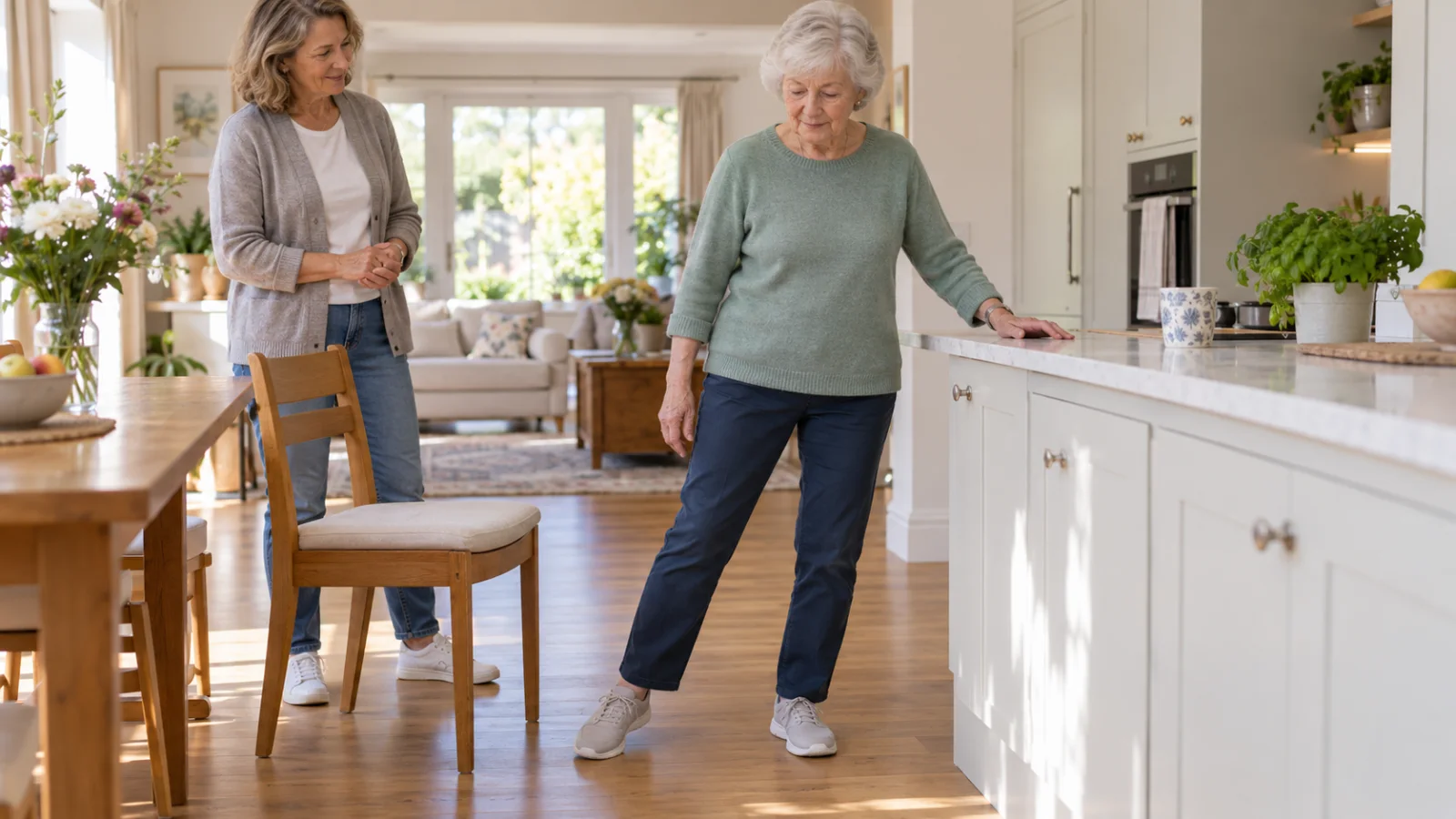
The UK Chief Medical Officers’ guidance for adults aged 65 and over recommends regular activity, including activities to maintain or improve muscle strength, balance and flexibility on at least two days a week. It also sets a weekly aerobic activity target, to build up gradually. These population guidelines are not a personal prescription; a suitable starting point depends on individual circumstances.
The same guidance recognises that light activity can still be worthwhile, especially for people who are currently less active or living with frailty. It describes ways activity can be part of everyday routines, while emphasising the value of strength, balance and flexibility. Read the UK Chief Medical Officers’ physical activity guidelines for the full context rather than treating one target as a requirement for every reader.
The NHS publishes examples of balance activities for home use and suggests using a wall or stable chair nearby if needed, then building up gradually. Its page can help readers see the kinds of movements discussed, but an online example cannot assess an individual’s fall risk or determine which movement is suitable for them. See the NHS balance exercises information and follow its safety notes.
Some people are already active and want a new challenge. Others may be returning after time away from exercise, managing fatigue, or looking for more confidence with a routine task. A group class, a home activity, a seated option, a hand-supported movement or an individually adapted session may suit different circumstances. None is automatically right for everyone.
NICE says falls-prevention programmes for people needing comprehensive falls management should be led by appropriately trained professionals, tailored to personal needs, preferences, goals and abilities, and reviewed as they progress. They may address balance, coordination, strength and power. A generic online list cannot provide that individual review. Read NICE guidance on falls assessment and prevention for its scope and recommendations.
A discussion might start with a daily goal, such as turning in the kitchen or rising from a favourite chair. A professional can ask what feels difficult and whether a clinician has given relevant advice. This hypothetical example is not a client story or outcome claim.
For a movement activity already considered suitable, think about the setting: is the floor clear and well lit, and is any nearby support stable? Can you avoid rushing or reaching beyond a comfortable range? The NHS recommends using a wall or stable chair nearby where needed and building up gradually; follow its notes rather than copying a pose from a photo.
Options that a qualified instructor or clinician might discuss include using hand support, choosing a seated or standing variation, reducing the range of movement, or taking a rest. These are examples of possible adaptations, not instructions for every reader. Do not move a walking aid, change prescribed support, or practise unsupported standing because a picture suggests it. If you feel unwell, unexpectedly dizzy or unsafe, stop and seek advice appropriate to the situation.
A brief note may help you remember what you tried and what you want to ask. It is not a falls-risk score, diagnostic tool or substitute for assessment; leave out private details if you prefer.
| Date or time | Activity or everyday task | Setting and support used | How it felt or question to ask |
|---|---|---|---|
| ____________ | ________________________ | ________________________ | ________________________ |
| ____________ | ________________________ | ________________________ | ________________________ |
| ____________ | ________________________ | ________________________ | ________________________ |
You might note whether you felt steady, needed more support than expected, or chose to stop. Avoid comparing your notes with someone else’s or using them to decide that a symptom is harmless. If a pattern worries you, share it with a GP, physiotherapist or other relevant professional.
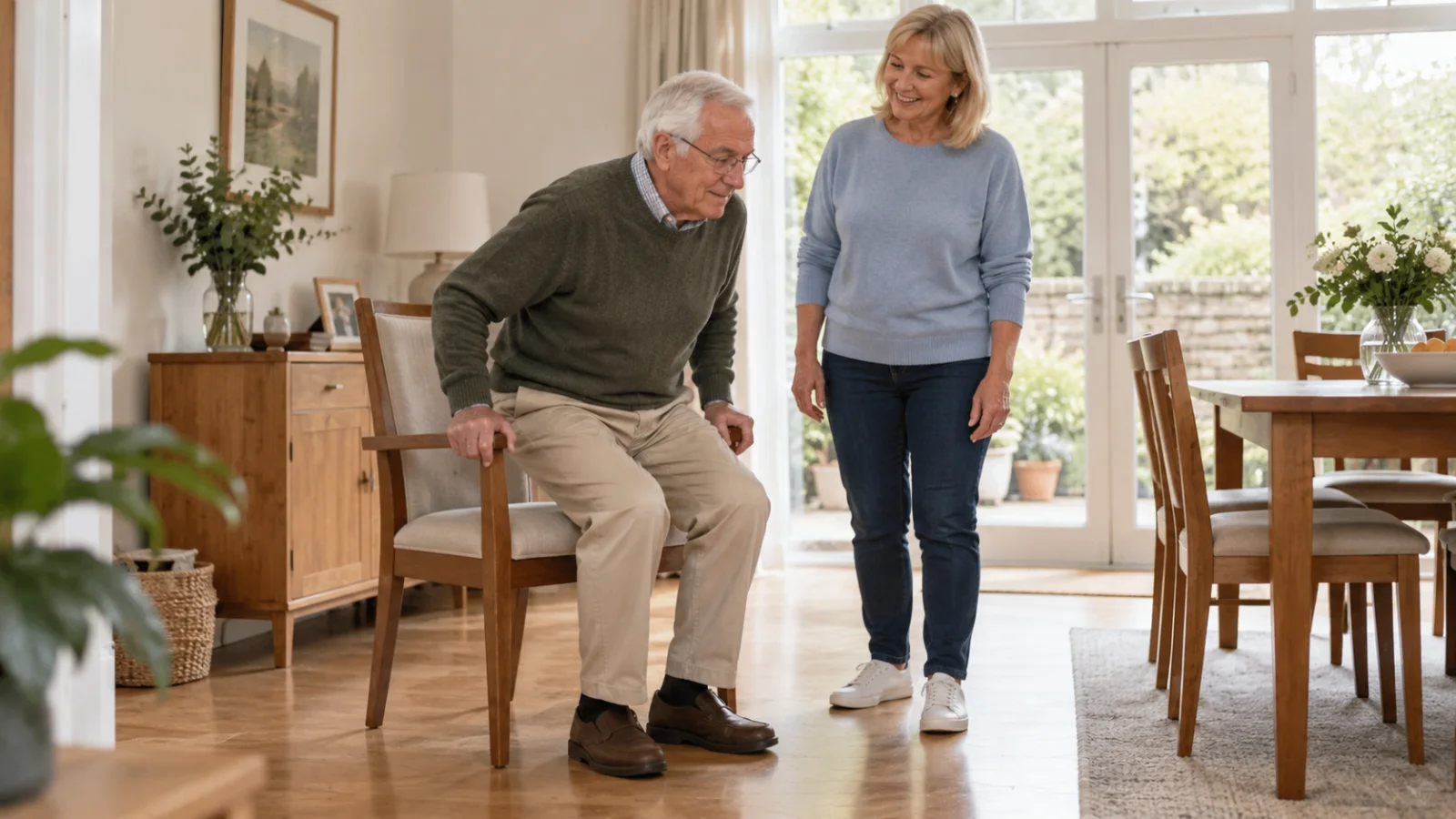
Ask for advice if you have fallen, feel persistently unsteady, have a new change in walking or balance, or are unsure how an existing condition affects movement. A fall that caused an injury, repeated falls, difficulty getting up afterwards, fainting or new dizziness deserve particular attention. NICE guidance identifies circumstances in which a comprehensive falls assessment should be offered; a healthcare professional can help work out what applies and whether referral is needed.
Some factors that may be considered include gait and balance, muscle strength, medication, vision, hearing, feet and footwear, and the person’s home environment. That does not mean any one factor explains a fall. It shows why a qualified assessment can consider more than exercise alone. If you have osteoporosis, a history of fracture, heart or neurological conditions, or instructions after surgery or illness, check with your clinician about relevant precautions before taking up a new programme. NHS information about keeping bones healthy over 65 also notes that people with high fracture risk or spinal fractures may need tailored advice about certain movements.
For information about Body Brokers’ services, visit the services page. The private clients page describes its one-to-one approach. If you are considering individual support for long-term mobility, ask how the provider works alongside your healthcare team where needed and how any programme would be adapted to your own circumstances.
Suitable strength and balance programmes are part of falls-prevention guidance for some people, but no article or exercise can promise that a fall will not happen. A person’s overall circumstances and risk factors matter, which is why NICE recommends individualised programmes for people who need falls management.
The UK guidance for adults aged 65 and over includes strength, balance and flexibility activities on at least two days each week. It is a broad public-health guideline, not an instruction to begin at that frequency or to practise without support. Someone’s starting point should reflect their abilities, health advice and chosen activity.
Some people use NHS public guidance for home activities, but home is not automatically suitable for every movement or person. Read the safety notes, keep appropriate support close and seek advice if you have concerns, a history of falls or difficulty with balance.
Key point: balance work should be relevant, manageable and adapted to the person. Use official guidance for general information, ask a qualified professional when individual circumstances matter, and treat any tracking note as a prompt for conversation rather than a test.

 November 06, 2026 - BY Admin