
 November 08, 2026 - BY Admin
Resistance bands are light to store, inexpensive compared with many larger pieces of equipment and available in several styles. They can make strength exercises more accessible at home or while travelling. If you are new to strength work, though, the choice of band and the way you use it matter more than buying a large set. This beginner’s guide explains how to get started, using a seated band row as an example rather than as a personal exercise prescription.
Resistance bands provide elastic resistance: the band stretches as you move, so the feel of an exercise can change through its range. They are one option for strength work, alongside bodyweight movements, free weights and machines. The right starting point depends on your experience, comfort, equipment and any relevant health considerations.
What is resistance-band training?
It is strength exercise in which a flexible band supplies resistance while you move against it. Bands may be flat therapy-style strips, loop bands or longer tubes with handles. Their labels and colours are not standardised across manufacturers, so a particular colour does not reliably mean the same resistance from one brand to another. Read the maker’s guidance and inspect the band before use.
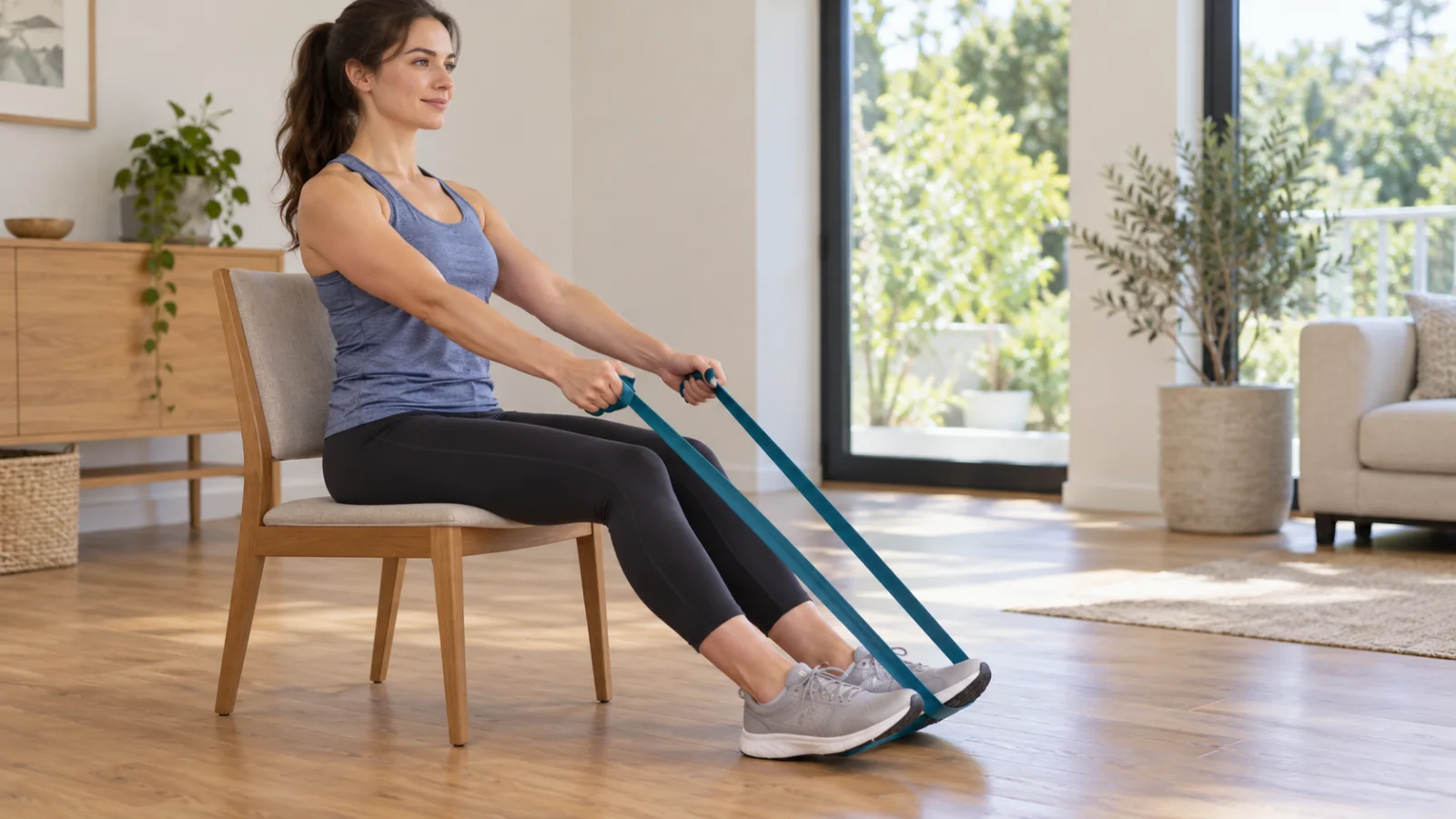
A band can be anchored or held in different ways to suit an exercise. For a seated row, for example, a long band may be placed securely around the midfeet while you hold its ends and draw your elbows back. Gloucestershire Hospitals NHS Foundation Trust includes a seated band-row example in its exercise information sheet. The example here is for learning the movement pattern, not a recommendation that everyone should do it.
Who might find bands useful?
Bands can be useful for people who want compact equipment, prefer to exercise at home, or want another way to make a movement easier or harder. They can also be used in supervised exercise. They are not automatically safer or more suitable than weights: a band can snap, slip or pull you off balance if it is damaged, poorly secured or used with unsuitable technique.
Think about your own situation before following an online exercise. If you have an injury, a health condition that affects exercise, new or worsening symptoms, a recent operation or health event, or uncertainty about what is appropriate, speak with a suitable health professional before starting. General exercise information cannot assess your individual circumstances. NHS exercise guidance similarly advises people with a health problem, injury or symptoms to seek appropriate advice and to stop if they feel pain or become unwell.
Do not use a damaged, cracked or sticky band. Follow the manufacturer’s instructions for use, storage, cleaning and any anchor. Keep the band away from sharp edges and your face, and avoid stretching it beyond the stated limit. Check that a chair or anchor cannot slide or tip. If a setup does not feel secure, do not pull against it.
A simple movement demonstration: seated band row
This example shows how a row can look; it is not a prescribed exercise or a complete workout. Use only equipment and a position that are suitable for you. If you are unsure, ask a qualified exercise professional or healthcare professional to check your technique and setup.
Step 1 — set up: Choose a stable chair on a non-slip surface. Sit towards the front with your feet supported. Place an intact band securely around the midfoot area over your shoes, hold one end in each hand, and sit comfortably upright. Begin with the band only lightly taut; do not wrap it around your hands or feet.

Step 2 — move smoothly: Keeping your shoulders relaxed, bend your elbows and draw them gently back beside your body. Stop within a comfortable range, then return your hands forward under control. Avoid leaning backwards, shrugging, jerking or letting the band snap back. Breathe normally rather than holding your breath.
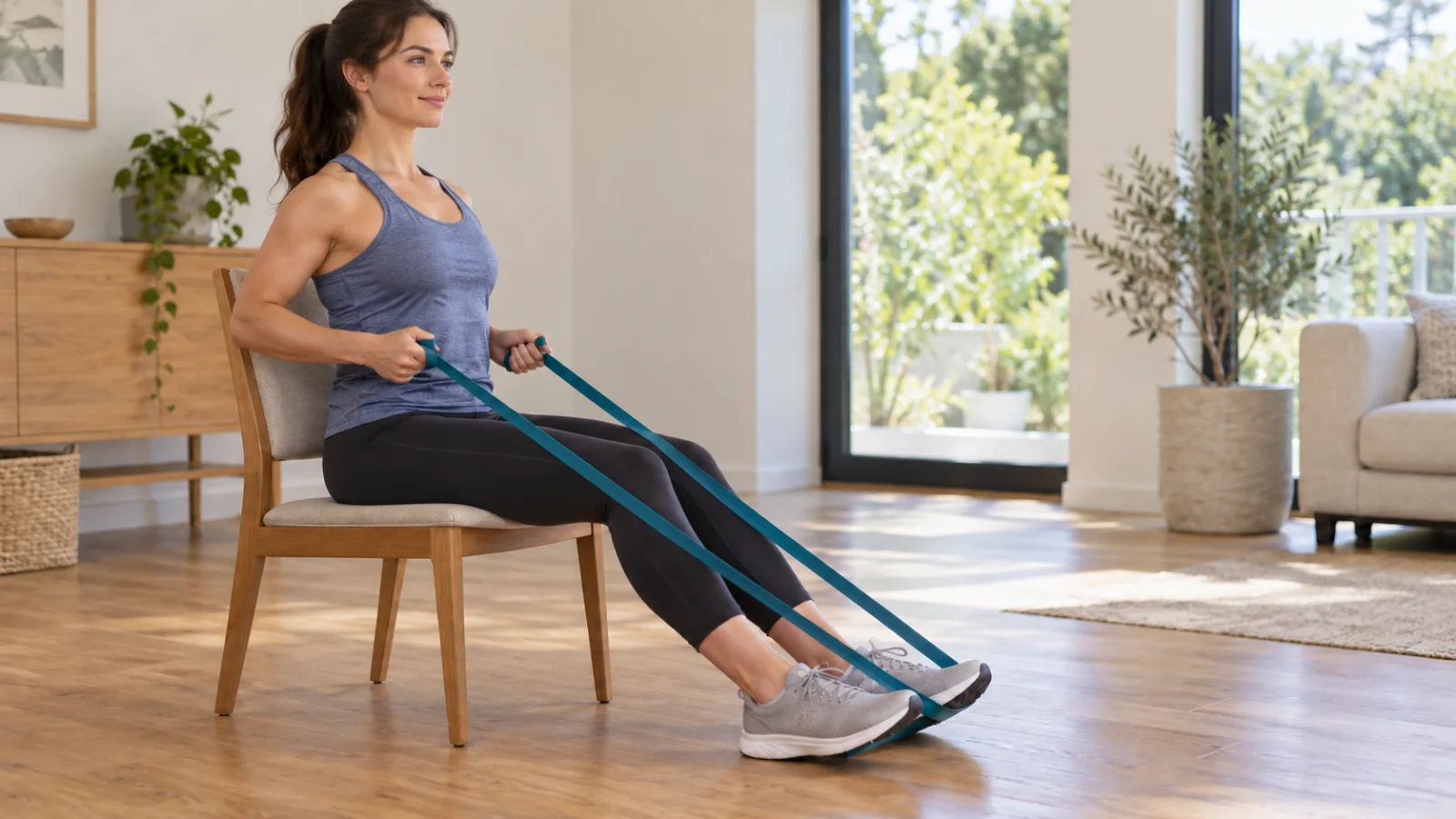
The images are illustrative. Stop and reassess if the band slips, feels too strong or causes discomfort.
How can you scale difficulty and notice progress?
With many band exercises, more stretch creates greater resistance. Small changes to hand position or the starting slack may change how demanding the row feels, but there is no universal setting. For a first session, the priority is a stable setup and a controlled, comfortable movement—not reaching a particular number of repetitions.
Progression can mean improving familiarity, control or confidence before increasing resistance. Change one factor at a time, such as using a slightly firmer band or adjusting the starting position by a small amount, and only if the equipment guidance allows it and the movement remains comfortable. You can also keep the same band and practise the movement with supervision. A simple log may record the exercise, band description, setup, how it felt and any questions for a coach. It need not record medical details.
UK Chief Medical Officers’ guidance recommends that adults include muscle-strengthening activities on at least two days a week as part of the population-level physical activity guidelines. That is broad public-health guidance, not an individual programme, and it does not mean every beginner should start at that frequency or use bands. Choose activity in a way that reflects your circumstances, and seek tailored advice if needed.
| Stage | A cautious focus | What to note |
|---|---|---|
| Getting familiar | Check the band and secure setup; learn a comfortable range. | Band type, chair or anchor, and any setup concerns. |
| Building consistency | Repeat a suitable version with smooth, controlled movement. | Whether it felt manageable and what you would ask a coach. |
| Considering a change | Only adjust one factor after the current version feels controlled. | What changed and whether the setup remained secure. |
This table is a learning aid, not a weekly plan. Individual needs and recovery differ.
Common beginner mistakes
- Choosing the strongest band first. A very taut band may make it difficult to move with control. Start by checking suitability and the maker’s instructions, not by chasing more resistance.
- Trusting colour alone. Band colours vary by brand. Read the packaging and identify the band in your notes by its stated type or resistance description.
- Skipping the inspection. Look for tears, worn areas or damage before each use. Replace a compromised band instead of relying on it.
- Using an insecure anchor. A door handle, light chair or sharp edge may not be suitable. Use only a stable setup intended for the exercise and equipment.
- Pulling quickly or leaning to finish. Reduce the challenge and practise a smoother range; do not use momentum to force a repetition.
- Ignoring symptoms. Stop if you feel pain, become unwell or feel unsafe. If symptoms persist or you are concerned, contact an appropriate health professional or NHS 111 for advice.
Frequently asked questions
Are resistance bands enough for strength training?
Bands are one possible way to add resistance, but whether they meet a person’s needs depends on the exercises, the band and the person. They are not essential; bodyweight exercises and other equipment are alternatives. A qualified coach can discuss options against your goals and experience.
How often should a beginner train with bands?
There is no single frequency that suits everyone. The national guideline for muscle-strengthening activity is general advice for adults, not a personal training schedule. Consider your starting point, recovery and health, and get individual guidance if those factors are unclear.
Can I use a band if I have back pain or another condition?
This article cannot determine whether an exercise is suitable for you or explain the cause of pain. Ask a healthcare professional who understands your circumstances before starting or changing exercise, particularly if symptoms are new, worsening or affecting daily life.
Do I need a full set of bands?
No. Check what a suitable band for your intended exercise should be before buying equipment.
When should you seek support?
Ask for help if you are unsure how to set up a band, cannot find a comfortable controlled movement, or need exercise adapted around your experience or circumstances. Stop if you feel pain or become unwell; seek appropriate advice if symptoms continue or you are worried. For more information about individual coaching, see private personal training and the trainer’s qualifications. A conversation can help clarify whether coaching is relevant; it is not a substitute for clinical advice.